Want to see how companies
are benefited ?
Use Mera Monitor
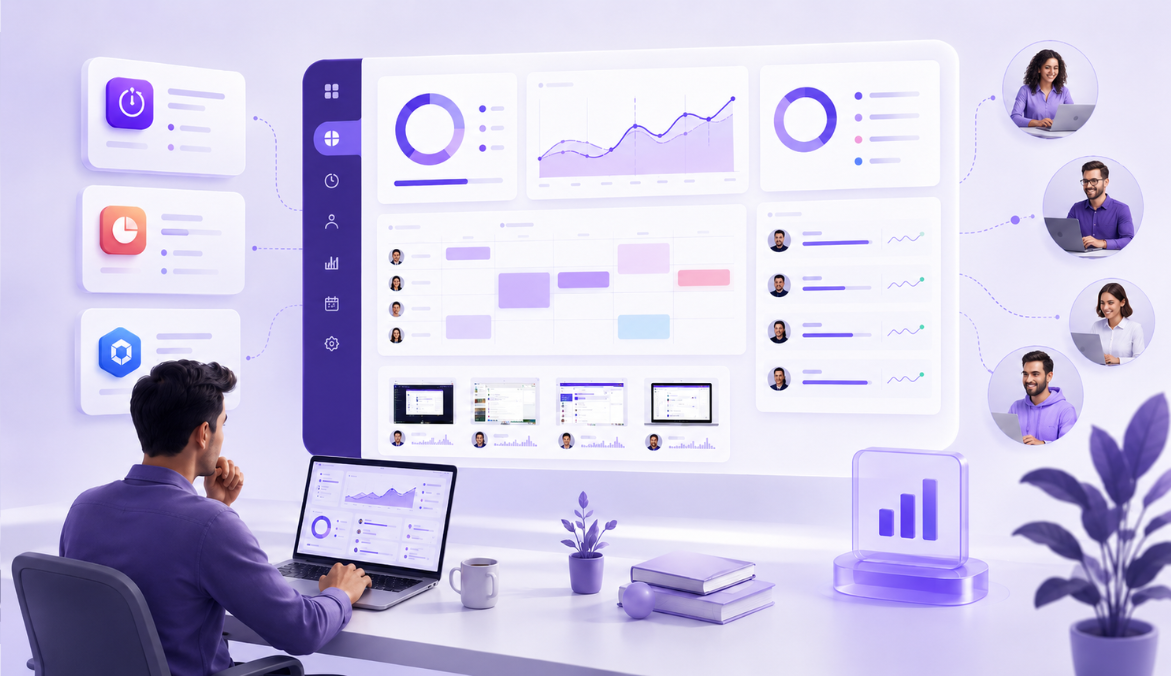
Capture time-stamped screenshots during work hours to understand progress, add context to employee activity, and make productivity follow-ups more objective — with configurable settings, blur options, and role-based access.
Understand what was happening during tracked work hours, review activity with time-stamped screenshots, and connect visual context with productivity data.
Use time-stamped screenshots to understand when specific work activity happened and review progress with better context.
Review screenshot records by employee to see work sessions more clearly, identify patterns, and make follow-ups more objective.
Mera Monitor supports responsible employee screenshot monitoring with configurable rules, blur options, and controlled access. This helps organizations use screen capture employee monitoring in a transparent and policy-aligned way.
Use blur options to reduce exposure of sensitive information while still keeping useful work context available.
Give screenshot visibility only to authorized users based on their role and responsibility
Configure screenshot settings around your work-hour rules, privacy expectations, and internal monitoring guidelines.
Screenshots become more useful when they are connected with tracked work time. Mera Monitor helps managers review screenshots alongside work hours, activity data, attendance, and app or website usage.
Time-based reviews help managers find relevant screenshots faster without going through unnecessary records.
Screenshots connected with work time give clearer context behind specific work periods, productivity dips, or follow-up discussions.
Work-hour focused monitoring keeps screenshot review aligned with defined work hours and business needs.
Mera Monitor helps organizations use screenshot monitoring software in a responsible way by keeping screenshot capture focused on work hours, controlled access, configurable rules, and privacy-friendly settings.
It gives managers the work context they need while helping companies stay aligned with internal policies, employee communication, and data access controls.
Set screenshot capture preferences based on your organization’s policy and work-hour requirements.
Use blur settings to reduce exposure of sensitive screen details while still maintaining useful work context.
Ensure screenshot records are visible only to authorized users based on role and responsibility.
Keep screenshot monitoring aligned with defined work hours and business needs.
Allow employees using personal devices to turn off Mera Monitor outside work hours.
Help teams understand what is tracked, when it is tracked, and why it matters.
Before enabling screenshot monitoring, be clear about why your organization needs it. The goal is not to track every action. The real purpose is to understand work progress, reduce guesswork, and support fairer productivity reviews.
Screenshot records are useful when teams work remotely, manage client projects, handle shift-based work, or rely heavily on digital tools. They help managers see what was happening during a specific work period instead of depending only on manual updates or assumptions.
Best used for:
Work visibility, productivity reviews, accountability, client work validation, remote team management, and fairer follow-up conversations.
Every organization has different work hours, privacy expectations, and review needs. That is why screenshot rules should be based on your company policy instead of using the same setup for every team.
With Mera Monitor, admins can configure screenshot preferences around how their teams work. This includes capture settings, work-hour rules, blur options, and access permissions.
Decide in advance:
When screenshots should be captured, which teams need screenshot review, whether blur should be enabled, who can access screenshot records, and how often the data should be reviewed.
Screenshot tracking should never feel unclear or unexpected to employees. When people know what is tracked, when it is tracked, and why it is used, the process becomes more transparent and easier to accept.
Explain that screenshots are captured during defined work hours to support work visibility, productivity reviews, and better follow-ups. Also make it clear that access is limited to authorized users and privacy settings can be applied where needed.
Use Mera Monitor
Screenshots should not be reviewed in isolation. A single image may not show the complete picture of someone’s workday.
For a fair review, managers should look at screenshot records along with work hours, activity levels, app and website usage, attendance, project updates, and the type of work assigned. This helps avoid quick assumptions and gives a more balanced view of productivity.
For example, low activity may not always mean low productivity. An employee may be reading a document, attending a meeting, reviewing a client brief, or waiting for system access. Work-time screenshots add useful context, but they should be reviewed with the full work picture.
Better review approach:
Look at time, activity, tools used, task type, and screenshot records together before making any decision.
Screenshot data should be handled carefully. Not everyone in the organization needs access to these records.
Mera Monitor supports role-based access, so screenshot visibility can be limited to the right people. This helps organizations protect employee privacy, maintain trust, and keep review permissions under control.
Access should usually be given only to people responsible for productivity reviews, team management, delivery tracking, or compliance.
Recommended practice:
Give screenshot access only to admins, managers, or authorized decision-makers who genuinely need it.
The best use of screenshot records is not to create pressure. It is to make conversations more specific, fair, and useful.
Instead of asking vague questions like “What were you doing?”, managers can use visual work records to understand blockers, delays, distractions, or support needs.
For example, they can ask:
“Were you blocked during this time?”
“Was this task taking longer than expected?”
“Do you need support with this workflow?”
“Is this tool or process slowing you down?”
This turns screenshot review into a support tool, not just a tracking feature.
Use it for:
Coaching, workload review, blocker identification, process improvement, and fair productivity discussions.
Use Mera Monitor
Screenshot settings should evolve as your team, policies, and work models change.
A setup that works for a remote support team may not work for a design team, sales team, or leadership role. That is why it is important to review screenshot frequency, blur settings, work-hour rules, and access permissions from time to time.
Regular reviews help keep screen capture relevant, fair, and aligned with business needs.
Check regularly:
Screenshot frequency, blur settings, access permissions, employee communication, work-hour rules, and policy alignment.
Screenshot monitoring can give leaders useful visibility, but it should always be used with trust and transparency.
The goal is to help teams work better, not to make employees feel watched. When used properly, screenshot records can reduce unnecessary follow-ups, improve accountability, and support better decision-making.
Mera Monitor helps create this balance with work-hour focused tracking, configurable rules, blur options, and role-based access.
The right approach:
Use screenshot monitoring to bring clarity into work, support employees better, and make productivity decisions with more confidence.
Screenshot monitoring software captures screen images during defined work hours to help managers understand work activity, progress, and productivity patterns with better context.
Mera Monitor captures time-stamped screenshots based on company-defined settings, so teams can review work activity more objectively and reduce guesswork during productivity follow-ups.
Mera Monitor captures time-stamped screenshots during tracked work time based on your organization’s configured rules.

Managers can review screenshot records by employee, date, and time range to understand what happened during specific work periods. They can also connect screenshots with activity data, attendance, app usage, website usage, and productivity insights.
A screenshot monitor helps managers review work progress with visual context instead of depending only on manual updates or assumptions.
It helps them understand whether work was moving forward, where productivity gaps may exist, and when a follow-up conversation needs more context.
Yes. Admins can configure screenshot capture settings based on company policy, work-hour rules, privacy expectations, and access requirements.
Organizations can define how screenshot monitoring should work, who can access screenshot records, and whether privacy-friendly options such as blurred screenshots should be enabled.
Yes. Mera Monitor supports blurred screenshots to help reduce exposure of sensitive screen details while still keeping useful work context available.
This helps businesses balance employee privacy with the need for work visibility.
Employee screenshots can be viewed only by authorized users based on role-based access permissions.
Organizations can limit screenshot access to managers, admins, or selected decision-makers who need the data for work review, productivity analysis, or accountability discussions.
Mera Monitor is designed to keep screenshot monitoring focused on defined work hours.
For employees using personal devices, tracking can be turned off outside work hours based on company policy. This helps protect personal time and supports a more transparent monitoring approach.
Yes, when it is used with clear policies, work-hour limits, role-based access, and transparent communication.
Mera Monitor helps organizations use screenshot monitoring responsibly with configurable screenshot rules, blurred screenshots, and controlled access. This helps businesses maintain work visibility while reducing unnecessary exposure of sensitive information.
Yes. Screenshot monitoring helps remote and hybrid teams add visual context to work progress without depending only on manual updates, calls, or daily check-ins.
It helps managers understand work activity, review productivity patterns, and support distributed employees with better context.
Screenshot monitoring helps managers review work activity with time-stamped visual context.
Instead of depending only on assumptions or manual updates, managers can review screenshots alongside work hours, activity levels, attendance, app usage, and website usage. This makes productivity discussions more objective, specific, and fair.