Work Patterns: Types, Importance & How to Improve

    Work Patterns: Meaning, Types, Importance & How to Manage Them Effectively

Introduction

If you’ve been leading teams for a while, you’ve probably noticed this: Some people thrive early in the morning. Some peak late. Some do their best work in long, uninterrupted sessions. And others need structured collaboration windows.

These differences aren’t random — they’re work patterns, and understanding them can completely transform how your team works.

In my 10+ years working with remote, hybrid, and in-office teams, I’ve seen one thing repeatedly: Teams that understand and optimize their work patterns consistently outperform those that simply try to “work harder.”

So let’s break this down in a practical, simple way so you can use work patterns to improve productivity, reduce burnout, and create a more aligned team.

What Are Work Patterns? (Simple Meaning)

Work patterns are the structured ways in which employees plan, schedule, and execute work throughout the day or week.

They include:

  • When someone works
  • How they work
  • What rhythm they follow
  • How often they switch tasks
  • When they collaborate vs when they focus
  • And how their energy levels shift during the day

Work patterns have evolved massively in the last few years — remote work, flexible hours, and digital workspaces have changed not just where we work, but how we work.

Why Work Patterns Keep Evolving

  • Remote and hybrid teams
  • Global collaboration
  • A shift from “hours worked” → “outcomes delivered”
  • Data showing peak productivity windows
  • The rise of async communication
  • Productivity tools revealing real behavior, not assumptions

Understanding these patterns is no longer a “nice to have” — it’s essential for effective leadership.

Types of Work Patterns (Traditional, Modern & Digital)

Most HR blogs only talk about full-time, part-time, or shifts — but today’s workplace is far more dynamic. Here’s a complete list that actually reflects how teams work in 2025 and beyond.

1. Full-Time Work Patterns

The classic 9–5 or 8–6 schedule. Predictable, fixed, and still common in many sectors.

2. Part-Time Work Patterns

Reduced hours, flexible scheduling, often split across multiple clients or roles.

3. Shift Work Patterns

  • Rotational
  • Split shifts
  • Night shifts
  • Multi-location workforces

Essential for healthcare, customer support, BPO, manufacturing, and 24×7 operations.

4. Flexi-Time Work Patterns

Employees choose when they start or end — with core hours intact.

5. Remote & Hybrid Work Patterns

This is where most teams operate today:

  • Home + office combinations
  • Async across time zones
  • Collaboration windows instead of strict schedules

6. Compressed Work Week Patterns

Examples:

  • 4-day work week
  • 9/80 schedule
  • 10-hour × 4-day structure

Employees work fewer days without reducing output.

7. Task-Based or Output-Based Work Patterns

Focus is on deliverables, not hours. Great for engineering, creative, consulting, marketing, and project teams.

8. Gig & Freelance Work Patterns

Project-based, on-demand, self-managed.

9. Digital Work Patterns (Modern & Data-Driven)

This is where real insights come in. Digital work patterns reflect how people behave while working, not just when they work.

They include:

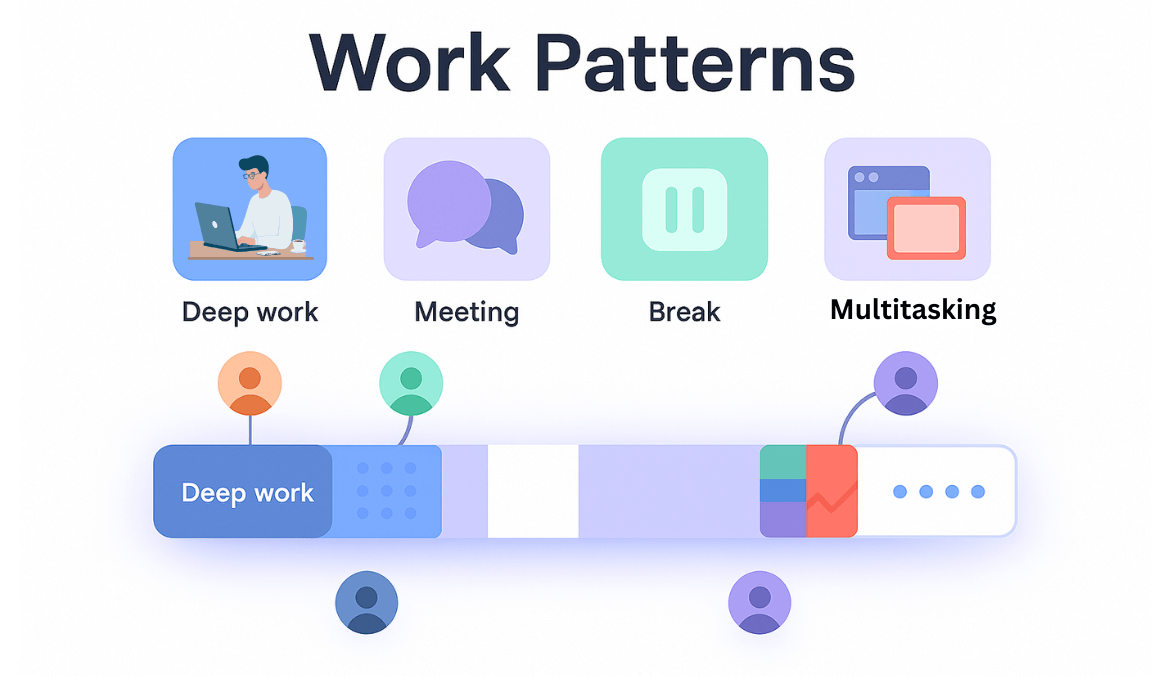
  • Focus cycles
  • Break cycles
  • App/URL usage patterns
  • Context switching
  • Deep vs shallow work
  • Energy-based work rhythms

I’ve seen this firsthand: across multiple teams I’ve coached, most people follow hidden digital patterns without even realizing it — and once we mapped those patterns, productivity rose by 20–30% simply by adjusting schedules around natural focus windows.

10. Behavioral Work Patterns

These patterns reflect how people prefer to work:

  • Deep work vs reactive work
  • Multi-taskers vs mono-taskers
  • Proactive vs deadline-driven
  • Collaboration-heavy vs independent

Understanding these prevents misalignment and conflict.
Why Work Patterns Matter in Modern Workplaces

Work patterns matter because they affect:

Productivity

Employees produce more in less time when working in sync with their natural rhythm.

Workforce Planning

Supports strategic workforce planning by helping managers allocate work more accurately.

Fairness & Transparency

Patterns reduce assumptions and prevent misunderstandings.

Remote & Hybrid Alignment

Teams collaborate better with predictable rhythms.

Burnout Prevention

Predictability reduces anxiety and overload.

Better Output Consistency

Consistent patterns → consistent performance.

How to Identify Work Patterns in Your Team

Most managers guess. Great managers measure. Here’s how to identify them effectively:

1. Observe Daily Time Use Trends

Look at when employees:

  • Start strong
  • Slow down
  • Take breaks
  • Prefer meetings
  • Hit energy dips

2. Track Productivity Peaks

Every person has high-focus periods. From experience, the most productive teams aren’t those who work the longest — they’re the ones who protect their peak productivity windows.

And research backs this up: a study by RescueTime found that on average, employees get just 2 hours, and 48 minutes of productive work done each day due to interruptions and mental fatigue.

3. Analyze Digital Activity Patterns

Using tools like Mera Monitor, you can track:

  • Active vs idle time
  • Deep work vs interruptions
  • Task-switching
  • Peak vs dip hours
  • Distraction patterns

This eliminates guesswork.

4. Map Team Collaboration Patterns

Check:

  • Overlapping hours
  • Meeting clusters
  • Slack/Teams burst times
  • Async vs sync tendencies

The Microsoft Work Trend Index reports that g lobal collaboration hours have shifted into a mid-day block—9–11 AM and 1–3 PM—showing a clear peak period for teamwork.

5. Study Workload Distribution Patterns

Patterns reveal:

  • Underutilized employees
  • Overworked individuals
  • Emerging bottlenecks
  • Hidden high performers

How to Manage Work Patterns Effectively

Now let’s focus on how to actually make these patterns work for your team.

1. Set Clear Expectations

Communicate:

  • Working hours
  • Availability windows
  • Collaboration blocks
  • Deep work periods

2. Align Patterns With Business Goals

Choose work patterns that support outcomes — not outdated norms.

3. Use Time Tracking & Activity Insights

Dashboard insights help ensure patterns actually work.

4. Reduce Context Switching

Encourage:

  • Task batching
  • Fewer notifications
  • Reduced Slack/Teams interruptions

This isn’t just intuition — the American Psychological Association found that task switching can lower productivity by up to 40% because the brain needs time to refocus after every shift.

5. Protect Deep Work Hours

This alone can transform performance.

Over the years, I’ve seen teams boost their output significantly by blocking 2–3 hours of meeting-free deep work time each morning. Most teams don’t need more hours — they need better protected hours.

6. Manage Remote Work Patterns Transparently

Remote employees need:

  • Clear expectations
  • Defined collaboration hours
  • Equal visibility
  • Smooth async workflows

7. Personalize Work Patterns Where Possible

Different employees thrive at different times — flexibility goes a long way.

Examples of Work Patterns (Simple & Practical)

Example 1: Early Peak Pattern

High focus: 7 AM–11 AM
Ideal for engineering, writing, research.

Example 2: Meeting-Heavy Midday Pattern

Teams collaborate most between 11 AM–3 PM.

Example 3: Deep Work AM, Collaboration PM

Popular among hybrid knowledge teams.

Example 4: Digital Work Pattern Example

  • 3 hours deep work
  • 6–8 context switches
  • Afternoon dip
  • Late-day productivity spike

Example 5: Async Remote Pattern

  • 4 overlapping hours
  • Work spread across time zones
  • Minimal meetings

Benefits of Understanding Work Patterns

  • Higher productivity
  • Better engagement
  • Improved performance evaluations
  • Efficient resource planning
  • Reduced burnout
  • Easier remote/hybrid management
  • Predictable output

How Mera Monitor Helps Identify & Optimize Work Patterns

Mera Monitor reveals real, data-backed work patterns based on actual activity — not assumptions.

  • Real-time activity tracking
  • Productivity insights
  • Digital focus cycles
  • Idle vs active time
  • Distraction analytics
  • Team-level rhythm dashboards

👉 See your team’s real work patterns instantly — Start your free trial at Mera Monitor

Final Thoughts

Work patterns are not just schedules — they’re the foundation of how people think, focus, collaborate, and deliver.

Once you understand your team’s natural work rhythms, everything improves:
planning, communication, productivity, and performance.

With the right insights and tools, you can uncover these patterns quickly and manage them intentionally.

👉 Optimize your team’s work patterns with Mera Monitor — Start your free trial today.

FAQs

They are structured ways employees schedule, organize, and complete work.

Full-time, part-time, shift work, flexi-time, compressed weeks, remote/hybrid, gig-based, digital, and behavioral patterns.

They improve productivity, reduce friction, balance workloads, and support clear planning.

By tracking productivity peaks, reducing context switching, protecting deep work time, and aligning schedules with natural rhythms.

Async + flexible hours + a few core overlapping collaboration hours.

Absolutely. When employees work in sync with their natural patterns, output rises dramatically.

Table of Contents

Author

  • Shashikant Tiwari is a digital marketing strategist with extensive experience in SEO, content strategy, and B2B SaaS marketing. At Mera Monitor, he creates actionable resources that help businesses track productivity, boost accountability, and empower teams to perform at their best.