Introduction
If performance appraisals feel tense, inconsistent, or quietly unfair in your organization, you’re not alone.
After working with managers, HR teams, and leadership groups for 20+ years, one pattern shows up again: appraisal processes don’t break because people don’t care. They break because reviews rely too heavily on memory, opinion, and last-minute judgment.
When that happens, bias creeps in, confidence drops, and even well-intentioned feedback starts feeling arbitrary.
Modern teams are approaching the performance appraisal process differently. They’re not trying to make reviews softer or more complex. They’re making them clearer, evidence-based, and easier to explain —for managers and employees alike.
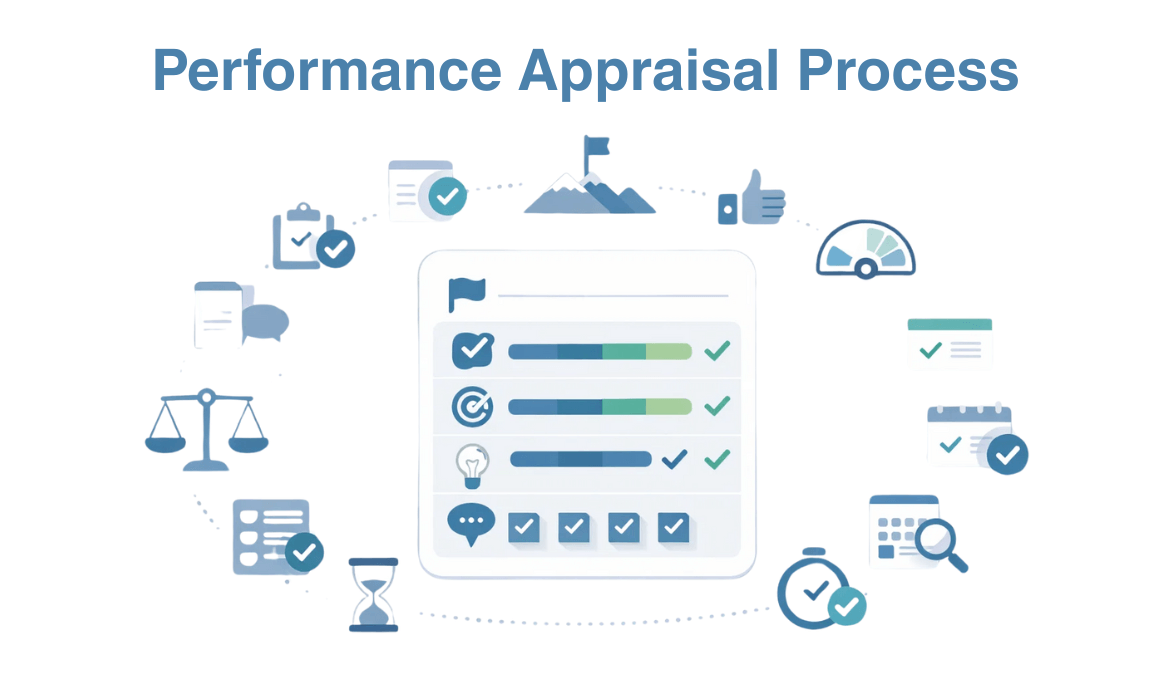
This guide walks through a practical, modern appraisal process designed to reduce bias and eliminate guesswork.
What Is the Performance Appraisal Process?
The performance appraisal process is a structured way to:
- Evaluate employee performance over a defined period
- Compare outcomes against agreed expectations
- Provide meaningful feedback
- Support growth, development, and fair decisions
It’s important to separate two commonly mixed concepts:
- Performance appraisal is a point-in-time evaluation
- Performance management is the ongoing system that feeds into it
Appraisals work best when they reflect what’s already been happening throughout the year—not when they try to summarize months of work from memory.
Why the Performance Appraisal Process Fails in Real Companies
Most appraisal issues are predictable.
According to a large Leadership IQ survey of 48,000+ employees, only 13% of employees and managers think their performance appraisal system is useful, and just 6% of CEOs find it useful — highlighting widespread dissatisfaction with traditional appraisal systems.
Common breakdowns include:
- Vague performance expectations
- Goals set once and forgotten
- Reviews based on recent events only
- Manager-only evaluations with no checks
- Inconsistent rating standards across teams
- Visibility bias, especially in remote or hybrid teams
Across multiple appraisal cycles, the biggest breakdown I’ve seen isn’t intent—it’s memory. When reviews depend on what a manager remembers from the last few weeks, high performers quietly lose out.
The Modern Performance Appraisal Process (Step by Step)
Step 1: Set Clear Performance Standards Before Goals
Before goals, define what “good performance” means in the role.
This includes:
- Core responsibilities
- Expected outcomes
- Non-negotiable behaviors (ownership, reliability, collaboration)
Actionable tip:
Ask managers to write one sentence:
“If someone performs this role well for six months, what would I clearly observe?”
If the answer is fuzzy, the appraisal will be too.
Step 2: Align Goals to Outcomes, Not Activity
Modern appraisals reward impact, not busyness.
Instead of:
- “Attends regular client meetings”
Use:
- “Closes follow-ups within 48 hours and improves client conversion rate”
Actionable check:
For every goal, confirm:
- What outcome does this drive?
- How will progress be visible?
Step 3: Use Rating Criteria People Can Interpret Consistently
Most rating scales fail because they rely on abstract labels:
- “Shows initiative”
- “Demonstrates leadership”
These invite interpretation—and bias.
What works better:
- Simple behavioral anchors
- Clear examples of what each rating looks like in practice
Step 4: Collect Evidence Continuously (This Is Where Bias Shrinks)
This step changes the entire appraisal experience.
Instead of reconstructing performance at review time, modern teams maintain lightweight evidence throughout the cycle:
- Key wins
- Missed commitments
- Feedback received
- Learning moments
- Milestone completion
This doesn’t need heavy documentation. Even short notes change the quality of reviews.
When teams move from recall-based reviews to simple evidence tracking, appraisal conversations shift quickly—from defending ratings to discussing growth.
Gallup data show that 80% of employees who received meaningful feedback in the past week report being fully engaged.
For distributed teams, work-visibility tools can support this step when used responsibly. Platforms like Mera Monitor , when positioned as insight tools rather than surveillance systems, can help managers reference patterns and workload context—supporting fairness, not control.
Step 5: Use Structured Self-Assessments
Self-reviews work best when guided using self appraisal comments .
Effective prompts include:
- What outcomes are you most proud of?
- Where did you struggle, and why?
- What support would improve your performance?
Avoid open-ended essays. Structure produces signal.
Step 6: Add Multi-Source Input Carefully
360-degree feedback can add value when focused.
Use it to:
- Validate trends
- Identify blind spots
Avoid:
- Too many reviewers
- Generic questions
- Popularity scoring
Keep inputs limited and role-specific.
Step 7: Manager Evaluation Should Be Evidence-Led
Strong manager evaluations:
- Reference specific examples
- Separate performance from potential
- Explain impact, not effort
If a rating can’t be supported with examples, it’s not ready yet.
Step 8: Calibration (The Most Skipped Step)
Calibration ensures fairness across teams.
It helps organizations:
- Align rating standards
- Detect leniency or severity bias
- Prevent uneven outcomes
Calibration meetings don’t get uncomfortable because of numbers. They get uncomfortable when managers realize their standards aren’t as consistent as they assumed.
Even a short calibration discussion dramatically improves trust in the process.
Step 9: The Appraisal Meeting Is a Conversation
Effective appraisal meetings follow a simple flow:
- Acknowledge contributions
- Review outcomes
- Discuss gaps honestly
- Agree on next steps
- Clarify support needed
The meeting shouldn’t feel like a verdict—it should feel like alignment.
Step 10: Document Outcomes and Follow Through
An appraisal without follow-up doesn’t change performance.
Each review should end with:
- A clear development plan
- Expectations for the next cycle
- Scheduled check-ins
Consistency builds credibility.
How to Reduce Bias in the Performance Appraisal Process
Bias reduces when systems are designed to limit it.
Research shows that 51% of workers believe their performance reviews are biased , with such bias linked to stress, reduced engagement, and unfair advancement outcomes.
Common biases include:
- Recency bias
- Halo or horns effect
- Similarity bias
- Leniency or severity bias
Bias blockers that work:
- Evidence requirements
- Behavioral anchors
- Multiple input sources
- Calibration reviews
Performance Appraisal Methods (Choosing the Right One)
- OKR-based appraisals: Outcome-driven roles
- 360 feedback: Leadership and collaboration roles
- Continuous reviews: Fast-moving teams
- Annual reviews: Only when supported by strong check-ins
No single method fits every organization. Consistency matters more than complexity.
What a Practical Performance Appraisal Form Should Include
A practical appraisal form should include:
- Goals and outcomes
- Evidence references
- Ratings with justification
- Development actions
If your form encourages vague writing, the appraisal will be vague too.
Tools and Data: Reducing Guesswork Without Losing Trust
Used well, data supports better conversations.
It can help:
- Highlight workload imbalance
- Surface execution bottlenecks
- Provide neutral reference points
Used poorly, it erodes trust.
Tools like Mera Monitor work best when they support coaching and clarity—not monitoring for its own sake.
Final Thought
The most effective appraisal processes I’ve seen didn’t motivate people through ratings—they earned trust through consistency.
A modern performance appraisal process isn’t about perfection. It’s about clarity. When guesswork is removed, performance conversations stop being feared and start being useful.