Introduction
For years, work-life balance was treated like a “nice-to-have.” Something people talked about during burnout—but ignored during delivery crunches.
That mindset no longer works.
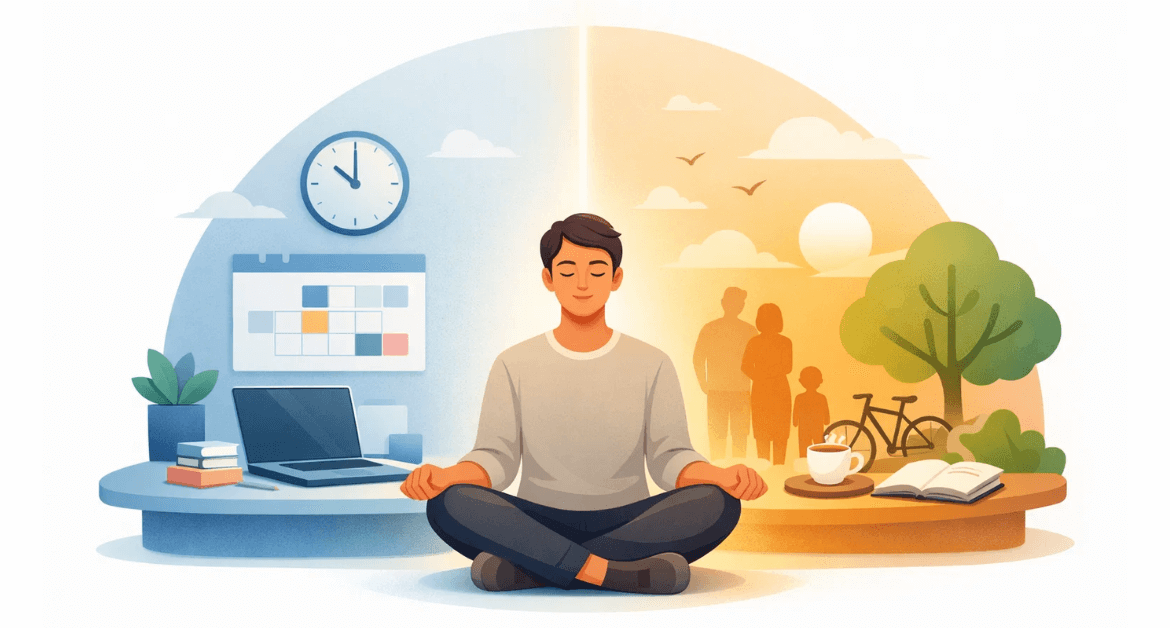
In today’s always-connected, remote-and-hybrid world, work-life balance isn’t about working less. It’s about working sustainably —without slowly burning out the very people your organization depends on.
And the need is real: according to recent data, 83% of employees say work-life balance is as important or more important than pay when evaluating a job, and many would even choose lower pay for better balance.
In my 10+ years working with teams across IT, operations, consulting, and leadership roles, I’ve seen one consistent truth: Performance drops long before people admit they’re exhausted. This guide explains what work-life balance really means today, why it matters, and how to improve it in realistic ways—for employees and managers alike.
What Is Work-Life Balance?
At its core, work-life balance means being able to meet your work responsibilities without sacrificing your health, relationships, or personal well-being .
It doesn’t mean working fewer hours every day. It means work doesn’t consume everything else.
Work-Life Balance vs Work-Life Integration
You’ll often hear terms like work-life integration or work-life harmony.
- Balance works well when boundaries are clear (fixed shifts, office work).
- Integration is more realistic for remote or flexible roles—but only if boundaries still exist.
In practice, most people don’t struggle because they work hard. They struggle because work never truly stops .
Actionable takeaway: Instead of chasing “perfect balance,” aim for predictable boundaries . Even imperfect ones help.
Why Is Work-Life Balance Important?
Work-life balance matters because humans aren’t machines —and pretending otherwise has real costs.
It Protects Mental Health and Reduces Chronic Stress
When work spills into every hour, stress doesn’t switch off. Over time, this leads to burnout , anxiety, sleep problems, and disengagement.
In a recent global workplace study, only about 33% of employees reported that they are thriving in their life overall , and wellbeing has been declining in recent years, showing the struggle isn’t isolated.
Experience insight : Most burnout cases I’ve seen weren’t caused by hard weeks—they came from never-ending weeks with no recovery.
Actionable advice: If stress feels constant rather than situational, that’s a system problem—not a motivation issue.
It Improves Performance (Not by Adding Hours)
More hours don’t equal better output. Fatigue reduces judgment, creativity, and decision quality.
And when employees believe their organization supports work-life balance, they’re found to be about 21% more productive and significantly more likely to stay with the company.
Actionable advice: Track outcomes, not hours. If long days aren’t improving results, something is broken upstream.
It Strengthens Personal Relationships
When work dominates life, relationships take the hit first—family, friends, even basic self-care.
And here’s the irony: people with stable personal lives usually perform better at work .
Actionable advice: Protect at least one daily non-work anchor (exercise, dinner with family, a walk). Treat it as seriously as a meeting.
It Improves Retention and Commitment
People rarely quit only because of pay. They leave because work consumes too much of their life.
Employees who report better work-life balance are not only more satisfied with their jobs , but are also less likely to leave their employer .
Actionable advice for leaders: If attrition is rising, don’t just review compensation. Review workload, after-hours expectations, and planning habits.
It Improves Decision-Making and Reduces Costly Mistakes
When people are constantly tired or mentally overloaded, decision quality drops—often quietly.
I’ve seen high-performing teams miss obvious risks, approve poor timelines, or make avoidable errors simply because everyone was running on fatigue. The issue wasn’t skill or intent. It was cognitive overload.
Balanced professionals think more clearly. They prioritize better. They pause before reacting.
Actionable advice: If mistakes are increasing or decisions feel rushed, don’t assume incompetence. First, check whether people actually have the mental space to think.
It Enables Long-Term Career Sustainability
Work-life balance isn’t about surviving this quarter—it’s about staying effective for years.
Many talented professionals don’t burn out suddenly. They slowly narrow their energy, ambition, and curiosity until work becomes something to endure rather than grow with.
Experience insight (10+ years): I’ve seen more careers stall due to prolonged imbalance than due to lack of talent or opportunity.
Balanced work patterns allow people to:
- Learn consistently
- Take on bigger responsibilities over time
- Stay motivated without constant recovery cycles
Actionable advice: If you want a long, meaningful career, treat balance as a strategic investment—not a reward you earn later.
Signs Your Work-Life Balance Is Off
Most people don’t notice imbalance immediately. It shows up in patterns.
Work Signs
- You’re always “just catching up”
- Messages feel urgent—even when they aren’t
- Meetings leave no space for real work
A recent survey found that 77% of employees report experiencing burnout at their current job.
Life Signs
- Weekends disappear into recovery
- Health routines slip
- Relationships feel neglected
Emotional Signs
- Irritability
- Brain fog
- Loss of motivation
Actionable advice: A bad week is normal. A bad pattern needs fixing.
How Managers Can Support Work-Life Balance (Without Losing Performance)
What Work-Life Balance Looks Like in Practice
Work-life balance isn’t created through policies alone. It’s shaped by the day-to-day decisions managers make—how work is planned, how expectations are set, and how visibility is used.
In the short video below, Abhijit Roy, CEO of Mera Monitor shares how leaders can use work visibility to design healthier workloads, reduce burnout, and support sustainable performance—without relying on constant availability or long hours.