Introduction
Time Doctor is a well-known name in time tracking and employee productivity monitoring. Many teams use it to track work hours, monitor activity, review screenshots, manage attendance, and understand how time is being spent during the workday.
But it may not be the right fit for every business.
Some teams want a simpler tool. Some need better productivity visibility. Some are looking for more flexible monitoring controls. Others want a solution that gives managers useful insights without making employees feel watched all the time.
That is why many businesses start searching for Time Doctor alternatives .
In my experience working with growing teams, the real issue is rarely just “time tracking.” Most leaders are trying to answer deeper questions: Where is work slowing down? Why are follow-ups increasing? Who is overloaded? Which activities are affecting productivity? And how can we improve accountability without creating a micromanagement culture?
This guide compares the best Time Doctor alternatives for employee productivity tracking, time visibility, screenshots, reporting, and team management. The goal is to help you choose a tool that fits your team’s workflow, culture, and business needs.
How We Researched and Compared the Best Time Doctor Alternatives
Before we get into the list, it is important to be clear about how this comparison was created.
This article is based on publicly available product information, pricing pages, feature documentation, third-party review platforms, and real user feedback. We have not personally tested every tool listed here.
Instead of ranking tools only by the number of features they offer, we looked at how each platform fits real business use cases. A tool may look powerful on paper, but if it is difficult to adopt or feels too intrusive for your team, it may not deliver the results you expect.
What We Considered
While comparing these Time Doctor competitors, we looked at:
- Time tracking capabilities
- Employee productivity tracking
- Screenshots and activity visibility
- App and website usage insights
- Reporting and dashboards
- Ease of setup and adoption
- Privacy and trust controls
- Project and task-based time tracking
- Pricing and scalability
- Fit for remote, hybrid, office-based, and computer-based teams
- Common patterns from real user reviews
Note: Features and pricing may change over time. Before making a final decision, always check each provider’s official website for the latest details.
Quick Comparison of the Best Time Doctor Alternatives
| Tool | When to Choose It | What Users Commonly Value | Starting Pricing* |
|---|---|---|---|
| Mera Monitor | You need workforce productivity tracking with employee monitoring, time tracking, and workforce analytics. | Productivity visibility, accountability, attendance tracking, reporting, remote team usefulness, real-time monitoring, and support experience. | $4/user/month |
| Hubstaff | You manage remote, hybrid, or field teams and need time tracking with productivity and payment visibility. | Dashboard visibility, reduced follow-ups, time tracking, project tracking, payroll/admin support, and ease of use. | $7/seat/month |
| Toggl Track | You want simple time tracking and reporting without heavy employee monitoring. | Easy time logging, clean reports, cross-device access, integrations, and simple project tracking. | $10/user/month |
| DeskTime | You need automatic time tracking with productivity and activity visibility. | Screenshots, hybrid team visibility, productivity reports, app/website tracking, and ease of use. | $7/user/month |
| Insightful | You need remote employee monitoring, work activity analytics, and productivity visibility. | Work-from-home visibility, activity monitoring, productivity analytics, and support experience. | $8/seat/month |
| ActivTrak | You need workforce analytics and productivity trend visibility. | Active-time tracking, alerts, executive reporting, workload insights, and productivity data. | $10/user/month |
| Harvest | You need time tracking mainly for billing, invoicing, and project profitability. | Simple time tracking, clean UI, invoicing, project tracking, integrations, and billable-hour reporting. | $11/seat/month |
| Clockify | You need free or low-cost time tracking for projects, teams, and reports. | Ease of use, free plan, project tracking, dashboards, reports, and cross-platform access. | $9.99/user/month |
| Timely | You want AI-assisted automatic time tracking with less manual entry. | Background tracking, memory timeline, AI-assisted timesheets, billing support, and reduced admin effort. | $11/user/month |
| Connecteam | You manage deskless, mobile, or frontline teams. | Scheduling, time clock, communication, mobile access, task management, and simple team operations. | $35/month for first 30 users |
*Pricing may vary based on features, plan tiers, billing cycles, team size, and currency fluctuations. Always check the latest pricing on the official website before making a decision.
Top 10 Time Doctor Alternatives for Employee Productivity Tracking
Let’s look at the top Time Doctor alternatives and where each one fits best.
1. Mera Monitor
Best for: Teams that want productivity visibility, time tracking, screenshots, attendance insights, and work pattern reporting without creating a micromanagement-heavy culture.
Start Free Trial | Book a Free Demo
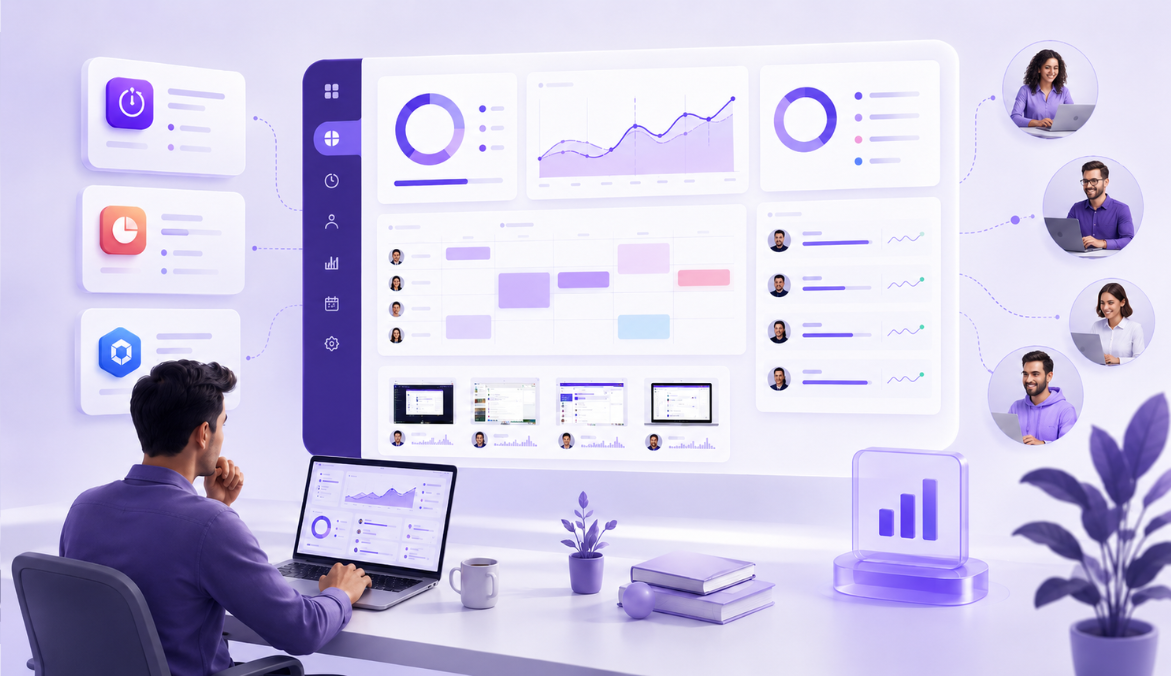
Mera Monitor is a strong Time Doctor alternative for teams that want clearer visibility into work hours, productivity patterns, attendance, and team activity — without turning productivity tracking into constant micromanagement.
It brings employee monitoring, automatic time tracking, screenshots, app and website usage insights, productivity reports, attendance tracking, time claims, and role-based access into one platform. The website positions Mera Monitor around helping teams “track, manage and improve team productivity” with features such as analytics dashboard, screen monitoring, productivity reports, apps/websites tracking, private mode, attendance tracking, and time claim.
What makes Mera Monitor useful is that it helps leaders move beyond basic “hours worked” data. It gives visibility into how work time is being used, where productivity gaps may exist, which apps or websites are taking attention, and how teams are performing across remote, hybrid, and office work modes. The platform also highlights real-time visibility into work habits, time usage, and bottlenecks.
Key Features of Mera Monitor
Workforce Analytics Dashboard
Mera Monitor gives managers a centralized view of real-time insights and workforce performance analytics. This helps teams understand productivity, time utilization, and work patterns without depending only on manual updates.
Automatic Time Tracking
Mera Monitor supports automatic time tracking and auto-filled timesheets, helping teams reduce manual time entry and get a more consistent view of work hours. This is useful when managers need work-time visibility without asking employees for frequent status updates.
Productivity Reports
The platform provides reports around employee productivity, time utilization, and task performance. This helps managers review productivity patterns, understand performance trends, and make more informed decisions.
Screenshot Monitoring
Mera Monitor includes screenshot monitoring to provide visual context into work activity. This can help improve transparency and accountability when used with clear internal policies and employee awareness.
The goal should not be to check every screen. The goal should be to create better work visibility, reduce guesswork, and support fair productivity conversations.
Expert insight: “The best productivity tracking system is not the one that collects the most data. It is the one that helps managers make better decisions without damaging employee trust.”
Live Screen Streaming
Mera Monitor also offers live screen streaming , which can be useful when teams need real-time visibility for support, operations, training, or urgent work situations. The website lists live screen streaming among its monitoring and tracking features.
This feature should be used responsibly and only where it aligns with company policy.
Apps and Website Usage Tracking
Mera Monitor helps managers understand how much time is spent on different apps and websites. This can help identify productivity gaps, software usage patterns, and distractions that may affect team output.
It can also support better software usage decisions. For example, if certain tools are paid for but rarely used, teams can review whether those licenses are still needed.
Attendance Tracking
Mera Monitor includes attendance tracking to help teams manage work presence, attendance patterns, and HR workflows more efficiently. The website presents employee attendance tracking as a way to boost productivity and streamline HR processes.
Online and Offline Activity Tracking
The platform supports online and offline activity tracking, which is useful for teams where internet connectivity may vary or where some productive work happens outside active system usage.
Time Claims and Approval Workflows
Mera Monitor includes time claims and approval workflows. This helps employees account for business meetings, offline work, or other valid work activities that may not be captured as active computer time.
Private Mode
Mera Monitor also includes private mode, which allows tracking to be disabled while employees work on confidential tasks or personal activities. This is important for teams that want productivity visibility while still respecting privacy boundaries.
Role-Based Access Control
Mera Monitor supports secure role-based access control, including user roles such as Admin, Report Admin, CXO, and User. This helps ensure that productivity and monitoring data is viewed only by the right people.
Mera Monitor vs Time Doctor: Feature Comparison
| Feature | Mera Monitor | Time Doctor |
|---|---|---|
| Employee monitoring | Yes | Yes |
| Time Tracking | Yes | Yes |
| Offline tracking | Yes | No |
| Attendance management | Yes | No |
| Auto email reports | Yes | No |
| Pricing | Starts at $4/user/month, billed monthly | Starts at $8/user/month, billed monthly |
Important note: Pricing may vary based on features, plan tiers, billing cycles, and currency fluctuations. Always check the latest pricing on the official website before making a decision.
For a detailed side-by-side breakdown, you can also check our full guide on the best Time Doctor alternative .
Pros of Mera Monitor
- Combines employee monitoring, time tracking, workforce analytics , and productivity reporting
- Helps managers understand work habits, time usage, productivity patterns, and bottlenecks
- Includes screenshots, live screen streaming, app/website usage tracking, attendance tracking, and time claims
- Supports remote, hybrid, and office work modes
- Role-based access helps control who can view productivity and monitoring data
- Private mode supports better privacy boundaries
- Pricing is transparent, with no feature restrictions mentioned on the pricing section of the website
Cons of Mera Monitor
- Best suited for teams that need structured work visibility, not teams looking only for a simple timer
- Screenshot monitoring and live screen streaming should be introduced with clear internal policies
- Freelancers or very small teams may not need the full monitoring and analytics feature set
Pricing
Mera Monitor pricing is currently structured as:
- Annual: ₹250/user/month
- Monthly: ₹325/user/month
- Enterprise: Custom pricing
Pricing may change, so check the official pricing page before making a final decision.
Reviews
Common review themes around Mera Monitor include ease of use, productivity visibility, attendance tracking, reporting, remote team usefulness, real-time monitoring, and support experience. Users often highlight that it helps improve accountability and simplifies daily monitoring for computer-based teams.
Best Fit
Choose Mera Monitor if you want a Time Doctor alternative that combines workforce analytics, employee monitoring, time tracking, productivity reports, screenshots, attendance insights, and role-based visibility in one platform.
It is especially useful for teams that want to understand how work time is being used, reduce productivity guesswork, improve accountability, and manage remote , hybrid , or office-based teams with clearer visibility.
Looking for a Time Doctor alternative built for clearer productivity visibility?
Start Free Trial | Book a Free Demo
2. Hubstaff
Best for: Remote, field, and contractor-based teams that need time tracking, GPS tracking, screenshots, payroll, and admin automation.
Hubstaff is a popular Time Doctor competitor for teams that need to track work hours across remote, mobile, or field-based employees. It helps managers see how time is spent, reduce manual follow-ups, review project activity, and connect tracked hours with payroll or invoicing.
It can be a good fit for teams managing hourly workers, contractors, virtual staff, or field teams. However, for teams that only need simple productivity visibility, features like GPS tracking, screenshots, and activity monitoring may feel heavier than required.
Key Features
- Time tracking
- Screenshots
- Activity monitoring
- GPS/location tracking
- Timesheets
- Payroll support
- Invoicing
- Project budgets
- Reports and dashboards
Pros
- Useful for remote, field, and contractor teams
- Helps reduce constant employee follow-ups
- Supports payroll, invoicing, and admin workflows
- GPS tracking helps with mobile workforce visibility
- Dashboard gives managers a quick view of team activity
Cons
- May feel too detailed for simple time tracking needs
- GPS and screenshot tracking may not suit every team culture
- Some advanced features may depend on plan selection
- Monitoring features should be introduced with clear communication
Reviews
Common review themes around Hubstaff include time tracking, remote team visibility, payroll automation, dashboard clarity, and ease of use. Users often mention that it reduces the need for constant follow-ups and helps managers understand how team time is being spent.
3. Toggl Track
Best for: Teams that want simple, polished time tracking with strong reporting and integrations.
Toggl Track is a good Time Doctor alternative for teams that want reliable time tracking without employee monitoring. It is popular among freelancers, agencies, consultants, and small teams that need to track project time, billable hours, clients, and team workloads.
Unlike Time Doctor-style monitoring tools, Toggl Track focuses more on clean time tracking, reports, and integrations rather than screenshots or activity surveillance.
Key Features
- One-click timer
- Manual time entries
- Web, desktop, and mobile tracking
- Timesheets
- Project and client tracking
- Billable hours
- Team reports
- Integrations with tools like Jira, Salesforce, QuickBooks, and calendar apps
Pros
- Clean and easy-to-use interface
- Good for project, client, and billable time tracking
- Strong reporting for teams and managers
- Works across multiple devices
- Good integration ecosystem
- Less monitoring-heavy than Time Doctor-style tools
Cons
- Not built for employee monitoring
- No screenshot or activity visibility features
- Free plan is limited for larger teams
- Timesheet approvals and advanced controls may require higher-tier plans
- May not provide deep productivity or workforce analytics
Reviews
Common review themes around Toggl Track include simplicity, ease of use, cross-device access, reporting, and flexible time tracking. Users often appreciate its clean interface and free plan, while some mention that it may feel limited for teams needing deeper monitoring or advanced task-level tracking.
4. DeskTime
Best for: Teams that want automatic time tracking with basic productivity and activity visibility.
DeskTime is a Time Doctor alternative that combines automatic time tracking with productivity insights, app and website usage tracking, optional screenshots, attendance management, and reports.
It can be useful for remote, hybrid, and office teams that want to understand work patterns without relying too much on manual timesheets. Compared with more advanced workforce analytics tools, DeskTime is better suited for teams that need straightforward monitoring and productivity reporting rather than deep analytics.
Key Features
- Automatic time tracking
- Project time tracking
- Manual and offline time tracking
- App and website usage tracking
- Screenshots
- Productivity calculation
- Reports and dashboards
- Attendance management
Pros
- Runs quietly in the background with automatic tracking
- Useful for remote, hybrid, and office teams
- Helps managers review productivity, app usage, and work hours
- Offers screenshots and reports for activity visibility
- Supports attendance and basic workforce management
Cons
- Productivity insights may be more surface-level for teams needing deep analytics
- App or website productivity categorization may need review
- Pricing can become a concern for larger teams
- Teams should explain screenshot and activity tracking clearly to employees
Reviews
Common review themes around DeskTime include automatic time tracking, employee activity visibility, screenshots, productivity reports, and hybrid team management. Users often like its reporting and screenshot controls, while some mention pricing and app/website categorization as areas to review.
5. Insightful
Best for: Teams that need workforce analytics, employee monitoring, and automatic time tracking.
Insightful is a Time Doctor competitor focused on work activity data, productivity analytics, employee monitoring, and time tracking. Its website positions the platform around helping teams understand how employees use their time, spot productivity risks, and improve workforce efficiency. Insightful also highlights features such as real-time overview, capacity analysis, app and website usage, screenshots, and automatic project/task time tracking.
It can be a good fit for remote, hybrid, and operations-led teams that want to move beyond basic timesheets and use work activity data for productivity decisions. However, based on user feedback, teams should review pricing, billing policies, and support expectations carefully before choosing it.
Key Features
- Automatic time tracking
- Workforce analytics
- Employee monitoring
- App and website usage tracking
- Screenshots
- Real-time productivity overview
- Capacity analysis
- Project and task time tracking
- Reports and dashboards
Pros
- Useful for remote and hybrid workforce visibility
- Helps track productivity trends and work activity
- Offers app, website, and screenshot-based insights
- Good fit for operations and productivity-focused teams
- Can help identify inefficiencies and capacity issues
Cons
- May feel more analytics-heavy than some small teams need
- Pricing and plan differences should be reviewed carefully
- Some users mention billing or support concerns
- Video or recording-based review may require extra time if not supported by smart analysis
- Monitoring features should be introduced with transparency
Reviews
Common review themes around Insightful include remote work visibility, productivity analytics, employee monitoring, and customer support. Feedback is mixed, with some users appreciating its monitoring capabilities while others mention pricing, billing, support responsiveness, or video-review limitations.
6. ActivTrak
Best for: Teams that need workforce analytics, productivity trends, and report-driven decision-making.
ActivTrak is a Time Doctor alternative focused more on productivity analytics than strict time tracking enforcement. It helps organizations understand how work happens through app and website usage, productivity dashboards, focus patterns, workload trends, and team-level insights.
It can be useful for companies that want structured, data-backed visibility into productivity across departments or teams. Compared with payroll-focused time tracking tools, ActivTrak is better suited for leaders who want to analyze work patterns, spot inefficiencies, and support long-term workforce planning.
Key Features
- Workforce analytics
- Productivity dashboards
- App and website usage tracking
- Focus time and distraction insights
- Workload and activity trends
- Team behavior insights
- Alerts and reporting
- Benchmarking across teams
Pros
- Strong analytics and reporting depth
- Useful for leadership and operations teams
- Helps identify productivity and workload patterns
- Less focused on screenshots compared with some monitoring tools
- Good for long-term performance and trend analysis
Cons
- May feel data-heavy for smaller teams
- Requires clear goals to turn insights into action
- Not ideal for payroll-driven time tracking
- Some users mention licensing costs and setup effort
- Teams may need time to interpret large amounts of data
Reviews
Common review themes around ActivTrak include workforce analytics, active time tracking, productivity insights, alerts, and executive reporting. Users often value its operational visibility, while some reviews mention licensing costs, setup effort, cancellation concerns, and the need to interpret large amounts of data carefully.
7. Harvest
Best for: Agencies, consultants, and professional services teams that need time tracking, billing, invoicing, and project budget visibility.
Harvest is a Time Doctor alternative focused on time tracking and billing, not employee monitoring. It helps teams track time against projects, clients, and billable work, then turn that data into invoices, reports, and budget insights.
It is a practical choice for client-service teams where the workflow starts with tracking hours and ends with billing clients accurately. Unlike Time Doctor-style monitoring tools, Harvest does not focus on screenshots, activity tracking, or deep productivity monitoring.
Key Features
- Time tracking
- Timesheets
- Project and client tracking
- Billable hours
- Invoicing
- Project budget tracking
- Billing reports
- Accounting and payment integrations
Pros
- Strong fit for agencies and professional services teams
- Simple and easy to adopt
- Good link between tracked time and invoicing
- Helpful for billable hours and project budget visibility
- Clean interface and useful integrations
Cons
- Not built for employee monitoring
- No screenshots or activity tracking
- Limited productivity analysis
- Advanced reporting and customization may feel limited
- Not ideal for long-term capacity or workforce planning
Reviews
Common review themes around Harvest include simple time tracking, clean interface, invoicing, billing, project tracking, and integrations. Users often find it useful for agencies and client-service teams, though some mention manual time entry, reminders, and limited advanced features as possible drawbacks.
8. Clockify
Best for: Cost-conscious teams that need simple, scalable time tracking without employee monitoring.
Clockify is a Time Doctor alternative built mainly for time tracking, timesheets, project reporting, and team hour management. It works well for freelancers, startups, and small teams that want an easy way to track work hours across projects and tasks.
It is a good starting point if your main need is time logs, not screenshots, activity monitoring, or deep productivity analytics. Teams can use Clockify to track billable hours, review project time, and create basic reports without adding heavy monitoring to their workflow.
Key Features
- Free time tracking
- Manual and automatic time tracking
- Timesheets
- Project and task-based reports
- Billable hours
- Team tracking
- Browser extension for web app tracking
- Approvals and time-off tracking on selected plans
Pros
- Strong free plan for basic time tracking
- Simple setup and easy to use
- Good for freelancers, startups, and small teams
- Helpful for project and task-based time reports
- Budget-friendly paid plans
- Works across many tools through browser extensions
Cons
- Not built for employee monitoring
- No screenshot or surveillance-style activity tracking
- Limited productivity or behavioral insights
- Advanced workflows depend on plan tier
- Project profitability insights may feel limited for growing service teams
Reviews
Common review themes around Clockify include ease of use, free time tracking, project-based reporting, cross-platform access, and team timesheets. Users often like its simple dashboard and generous free plan, while some mention sync delays, mobile app performance, and advanced reporting limits.
9. Timely
Best for: Teams that want AI-assisted automatic time tracking with less manual effort.
Timely is a Time Doctor alternative focused on automatic time tracking, AI-assisted timesheets, and background activity capture. Its website positions Timely as an AI-powered time tracking tool that helps teams auto-capture work, auto-allocate time to projects or clients, and approve timesheets with less manual effort.
It is useful for agencies, consultancies, professional services teams, and knowledge workers who need accurate timesheets for billing, utilization, and project reporting. Unlike Time Doctor-style monitoring tools, Timely is not mainly built around screenshots or employee surveillance. It focuses more on reducing time tracking admin and improving time data accuracy.
Key Features
- Automatic time tracking
- AI-assisted timesheets
- Memory-based activity timeline
- Project and client time tracking
- Billable rates
- People dashboard
- Time planning
- Reports and integrations
Pros
- Reduces manual time entry
- Helps improve timesheet completion and accuracy
- Useful for billing, utilization, and project reporting
- Works quietly in the background
- Good fit for agencies, consultancies, and professional services teams
- Less monitoring-heavy than employee surveillance tools
Cons
- Not built for screenshot-based employee monitoring
- May not suit teams that need live activity visibility
- AI categorization may need review or correction
- Project/task setup can take time for new users
- Pricing may be higher than basic time tracking tools
Reviews
Common review themes around Timely include automatic time tracking, AI-assisted timesheets, memory-based tracking, and reduced manual effort. Users often appreciate that it runs quietly in the background, while some mention that AI categorization and project/task navigation may need improvement.
10. Connecteam
Best for: Deskless, mobile, and frontline teams that need scheduling, time tracking, communication, and task management in one app.
Connecteam is a Time Doctor alternative built mainly for deskless and frontline workforce management. Its website positions it as an employee management app that helps teams schedule work, track time, communicate, manage tasks, and streamline daily operations from one mobile-first platform.
It is a better fit for teams that are not primarily working on desktops, such as field staff, retail teams, service teams, operations teams, and mobile employees. Unlike Time Doctor-style desktop monitoring tools, Connecteam is more focused on shift management, time clock, communication, task execution, forms, and frontline operations.
Key Features
- Employee time clock
- Staff scheduling
- GPS/location tracking
- Task management
- Team communication
- Forms and checklists
- Time-off management
- Timesheets and payroll exports
- Mobile app and kiosk clock-in options
Pros
- Strong fit for deskless, mobile, and frontline teams
- Combines scheduling, time clock, communication, and tasks in one app
- Mobile-first experience is useful for field teams
- Helps manage attendance, breaks, overtime, and timesheets
- Supports GPS-based clock-in and job/location tracking
- Offers a free small business plan for up to 10 users
Cons
- Not built for desktop productivity monitoring
- Less focused on screenshots, app usage, and workforce analytics
- Some advanced features may require paid plans
- May not suit teams looking for Time Doctor-style employee monitoring
- User reviews mention occasional bugs, loading delays, and customization limits
Reviews
Common review themes around Connecteam include scheduling, time clock, employee communication, mobile access, task management, and ease of use. Users often value it for mobile and frontline teams, while some mention plan limitations, occasional bugs, loading delays, and limited desktop productivity tracking.
Why Teams Start Looking for Time Doctor Alternatives
Businesses usually start looking for Time Doctor alternatives when they realize their current tool is not fully matching their workflow, team culture, or reporting needs.
Here are the most common reasons.
They Need Better Productivity Visibility
Tracking time is useful, but time alone does not tell the full story.
A person may be online for eight hours, but that does not always mean the time was productive. Managers often need to understand work patterns, distractions, idle time, workload balance, and project-level effort.
This matters because productivity issues are often hidden inside daily work patterns. Microsoft’s Work Trend Index found that 68% of people say they do not have enough uninterrupted focus time during the workday , while 64% struggle to find the time and energy to do their jobs . That is why businesses should not only track hours; they should also understand where work time is getting fragmented.
They Want Easier Adoption
A productivity tool should not create more work for managers or employees. If a tool is difficult to configure, hard to understand, or creates employee resistance, adoption becomes a challenge.
The best tool is one that fits naturally into daily workflows.
They Need Flexible Monitoring Controls
Not every team needs the same level of monitoring.
Some teams need screenshots. Some only need time tracking. Some need app usage insights. Some need attendance visibility. Others need project-based reporting.
A good Time Doctor alternative should allow businesses to choose the level of visibility they actually need.
Pricing Becomes a Concern
As teams grow, per-user pricing starts to matter. A tool that seems affordable for 10 users may become expensive for 100 or 500 users.
That is why businesses often compare pricing, plan limits, feature availability, and enterprise options before switching.
They Want Visibility Without Micromanagement
This is one of the biggest reasons teams look for alternatives.
For example, in many growing teams, managers do not want to check every screenshot or activity log. They simply want early signals — who may be overloaded, where idle time is rising, whether project time is being used properly, and where productivity gaps are forming.
The right tool should help leaders make better decisions, not turn managers into constant watchers.
What to Look for in a Time Doctor Alternative
Before choosing any Time Doctor competitor, be clear about what you actually need.
Here are the most important things to compare.
Accurate Time Tracking
Look for automatic time tracking, manual entries, idle time, offline time, and timesheets. If your team works across different locations or shifts, offline tracking and attendance visibility can be important.
Productivity Reports
Reports should help managers make decisions. Look for daily, weekly, team-level, department-level, and project-level reporting.
Avoid tools that only give raw data without useful interpretation.
Screenshots and Activity Visibility
If you need screenshots, check whether they are configurable. Can you adjust frequency? Can you blur screenshots? Can access be restricted?
Also, make sure your team has a clear internal policy before using screenshots.
Monitoring features should be used carefully. The American Psychological Association reported that 56% of workers who experience employer monitoring typically feel tense or stressed at work , compared with 40% of workers who are not monitored . This is why screenshots, activity tracking, and live visibility should always be paired with clear policies, role-based access, and employee communication.
App and Website Usage Insights
App and website usage data can help identify distractions, workflow gaps, and software usage trends.
This should be used to improve work systems, not to judge employees unfairly.
Project and Task-Based Time Tracking
For agencies, IT services companies, outsourcing teams, and professional services firms, project/task-based time tracking is very important.
It helps answer questions like:
- How much time did this project actually take?
- Which tasks are consuming more hours?
- Are we billing accurately?
- Are teams spending time on the right priorities?
Attendance and Work Pattern Visibility
Look for features that help you understand start time, end time, breaks, late starts, early logouts, and irregular work patterns.
These insights can help improve planning and accountability.
Privacy and Role-Based Access
This is critical.
Not everyone in the organization should have access to all productivity data. Role-based access helps ensure that managers, admins, CXOs, and users see only what is relevant to them.
Ease of Use
A tool may have many features, but if managers do not use it regularly, it will not create value.
Choose a tool that is easy to set up, easy to explain, and easy to adopt.
Pricing and Scalability
Compare:
- Monthly pricing
- Annual pricing
- Free trial
- Free plan
- Enterprise pricing
- Add-ons
- Feature limits
- Data retention
- Support availability
Do not compare only the starting price. Compare what you actually get at that price.
Time Doctor vs Competitors: What Should You Compare?
When comparing Time Doctor with other tools, do not stop at “who has more features.” That is not always the best way to choose software.
Compare based on how the tool will work for your actual team.
Time Tracking Depth
Check whether the tool supports automatic tracking, manual tracking, offline tracking, idle detection, and timesheets.
Monitoring Flexibility
Compare screenshots, screenshot frequency, blur options, activity tracking, live visibility, and permission controls.
Productivity Insights
Does the tool only track time, or does it help you understand productivity patterns?
This difference matters. A basic time tracking tool may show hours. A productivity-focused tool should help you understand what those hours mean.
Reporting and Dashboards
Look for dashboards that are clear, not confusing. Reports should be easy for managers to use without needing too much manual analysis.
Project and Task Visibility
If your team works on client projects, delivery work, support tickets, or internal tasks, project/task-based tracking can be very useful.
Privacy and Trust Controls
Compare role-based access, private mode, screenshot controls, data visibility, and transparency features.
This can directly affect employee acceptance.
Pricing
Pricing should be evaluated based on value, not just cost.
A cheaper tool may not be the best option if it lacks the visibility you need. A more expensive tool may not be worth it if your team only needs basic tracking.
Best-Fit Use Case
Compare tools based on your team type:
- Remote teams
- Hybrid teams
- Office-based teams
- Agencies
- IT services companies
- BPO /support teams
- Field teams
- Freelancers
- Deskless workers
How to Choose the Best Time Doctor Alternative
The best Time Doctor alternative depends on what you want to improve — time tracking, productivity visibility, billing, workforce analytics, or team operations.
Before choosing a tool, focus on the problem you want to solve, not just the feature list.
1. Define Your Main Use Case
Choose based on your priority:
- Mera Monitor for workforce productivity tracking, employee monitoring, time tracking, and visibility.
- Hubstaff for remote or field team tracking with GPS and payroll support.
- Toggl Track or Clockify for simple time tracking.
- Harvest for billing, invoicing, and project profitability.
- ActivTrak or Insightful for workforce analytics.
- Connecteam for mobile, frontline, or deskless teams.
2. Compare Visibility vs Monitoring
Decide how much visibility your team really needs. Some teams need screenshots, app usage insights, attendance, and productivity reports. Others only need timesheets.
Choose a tool that gives useful insights without collecting data your managers will never use.
3. Check Employee Experience
A tracking tool works better when employees understand why it is being used. Look for transparency, privacy controls, role-based access, and flexible tracking settings.
4. Review Reporting Quality
Good reports should help managers take action. Check whether the tool clearly shows time usage, productivity patterns, project hours, attendance trends, and workload signals.
5. Match It to Your Work Model
Desktop teams, field teams, agencies, and frontline teams need different tools. Pick the one that fits how your team actually works.
6. Compare Pricing with Value
Do not compare only starting price. Check what features are included, which ones need higher plans, and whether the tool will still make sense as your team grows.
Final Tip
Choose the tool your managers will actually use, your employees can understand, and your leadership can trust for better decision-making.
Final Thought: Which Time Doctor Alternative Should You Choose?
There is no single best Time Doctor alternative for every business.
If you only need basic time tracking, tools like Clockify, Toggl Track, or Harvest may be enough.
If you manage remote or field teams, Hubstaff or Connecteam may be a better fit.
If you need workforce analytics, ActivTrak or Insightful may be worth considering.
But if your team works mainly on computers and you want better visibility into work hours, productivity patterns, screenshots, attendance, app usage, and project/task-based time, Mera Monitor is a strong option to consider.
The right tool should help you improve clarity, accountability, and productivity — without making employees feel like they are being watched every second.
The bigger goal is not just tracking time — it is improving engagement, clarity, and productivity. Gallup’s State of the Global Workplace 2026 report found that global employee engagement fell to 20% in 2025 , and low engagement cost the world economy an estimated trillion in lost productivity . That makes it even more important to choose a tool that helps managers understand work patterns, not just count hours.
CTA: Ready to improve team visibility without adding unnecessary complexity? Start your 14-days free trial of Mera Monitor or book a free demo .
FAQs
Some of the best Time Doctor alternatives include Mera Monitor, Hubstaff, Toggl Track, DeskTime, Insightful, ActivTrak, Harvest, Clockify, Timely, and Connecteam.
Teams usually look for alternatives when they need better pricing, easier adoption, more flexible monitoring, stronger reports, or better productivity visibility.
Mera Monitor is a strong option for employee monitoring, time tracking, screenshots, attendance tracking, productivity reports, and workforce analytics.
Toggl Track, Clockify, Harvest, and Timely are good options for simple time tracking, billing, and timesheets.
Yes. Clockify offers a free plan for basic time tracking. Some other tools also offer free plans with limited features.
Hubstaff, Mera Monitor, Insightful, DeskTime, and ActivTrak can be useful for remote teams, depending on whether you need time tracking, monitoring, or analytics.
Harvest, Toggl Track, Clockify, Hubstaff, and Mera Monitor can work well for agencies, depending on billing, project tracking, and productivity visibility needs.
Toggl Track, Clockify, Harvest, and Timely are generally less monitoring-heavy because they focus more on time tracking than screenshots or activity monitoring.
Compare time tracking, screenshots, productivity reports, app/website usage, attendance, project tracking, privacy controls, pricing, and ease of use.
Mera Monitor may be a better fit for teams that need workforce analytics, employee monitoring, time tracking, screenshots, attendance visibility, and transparent pricing. The right choice depends on your team’s needs and budget.