Want to see how companies
are benefited ?
Use Mera Monitor
Review activity patterns and prolonged active time to identify employees who may be carrying excessive work pressure.
Understand where activity levels are consistently low, so managers can review support needs, work allocation, or role clarity.
Use user activity insights to support better workload distribution and reduce dependency on guesswork.
See which applications and websites are used during work time to understand digital work behavior more clearly.
Spot usage patterns that may affect focus, productivity, or daily execution.
Use activity insights to understand whether tools are supporting work or creating avoidable friction.
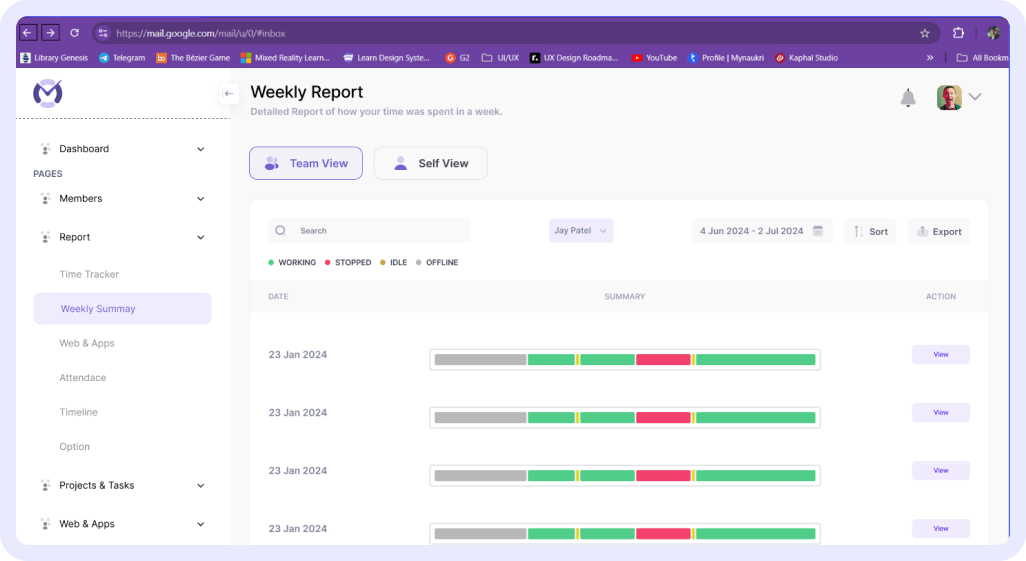
Review user activity data to understand how work time is spent across active, idle, productive, and unproductive periods.
Use objective activity insights to make follow-ups more specific, balanced, and data-backed.
Identify employees who show steady focus and work consistency, even if their contribution is less visible in daily updates.
Understand whether work hours are being spent on focused tasks, repetitive routines, or avoidable distractions.
Give managers clearer insight into whether daily activity is aligned with team goals and delivery priorities.
Use user activity monitoring to support better planning, sharper execution, and more productive work habits.
Set activity monitoring preferences based on your organization’s work policy, team structure, and productivity visibility needs.
Admins can categorize applications and websites as productive or unproductive based on the company’s work policy, department needs, and role-specific requirements.
Track user activity during defined working hours so monitoring stays aligned with business time and workplace expectations.
Ensure activity reports, app and website usage data, and productivity insights are visible only to authorized users based on their role and responsibility.
Review app and website usage in a structured way to understand work patterns, productivity trends, and non-work usage without unnecessary exposure beyond business needs.
Allow employees using personal devices to turn off Mera Monitor outside work hours, helping separate work tracking from personal time.
Help employees understand what activity data is tracked, when it is tracked, and how it is used to improve work visibility and productivity decisions.
Keep user activity data organized and accessible only to the right people, supporting better accountability, internal policy alignment, and responsible monitoring.
Use Mera Monitor
Use Mera Monitor
No. Idle time does not always mean an employee is not working. It may happen during calls, meetings, discussions, offline work, breaks, or system delays. Managers should review idle time trends with proper context instead of judging isolated moments.
Yes. Activity monitoring gives managers objective work activity data that can support performance conversations. However, it should be reviewed along with task progress, work quality, priorities, workload, and employee context.
Screenshot monitoring software captures screen images during defined work hours to help managers understand work activity, progress, and productivity patterns with better context.
Mera Monitor captures time-stamped screenshots based on company-defined settings, so teams can review work activity more objectively and reduce guesswork during productivity follow-ups.
Mera Monitor captures time-stamped screenshots during tracked work time based on your organization’s configured rules.
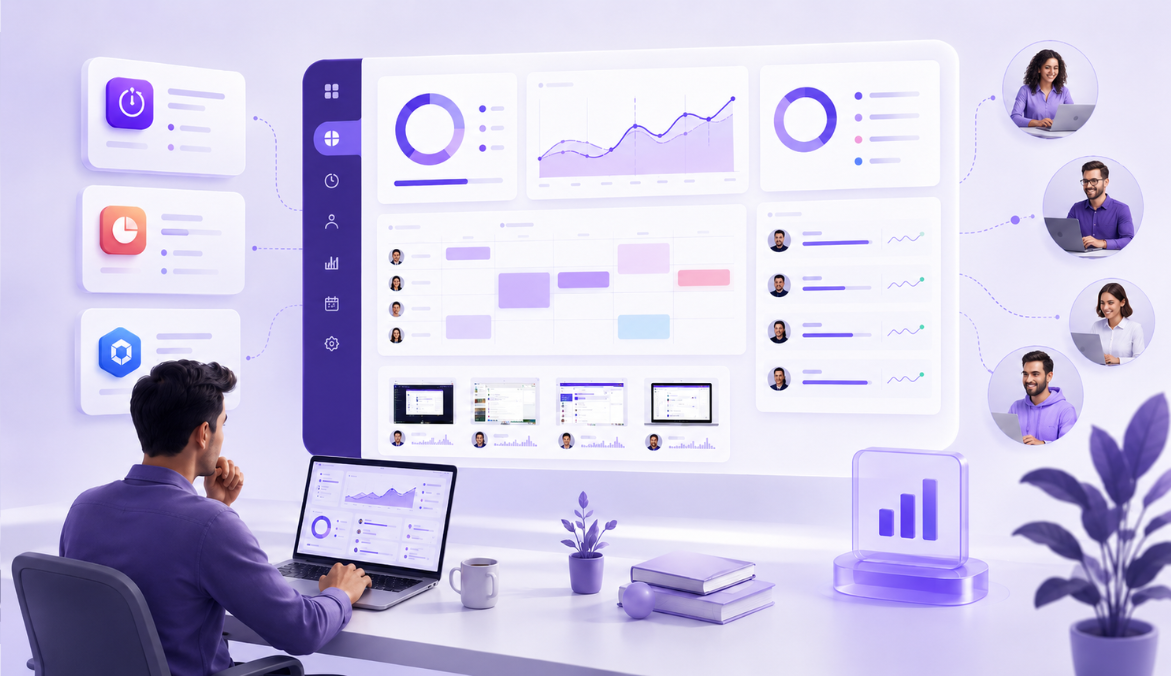
Managers can review screenshot records by employee, date, and time range to understand what happened during specific work periods. They can also connect screenshots with activity data, attendance, app usage, website usage, and productivity insights.
A screenshot monitor helps managers review work progress with visual context instead of depending only on manual updates or assumptions.
It helps them understand whether work was moving forward, where productivity gaps may exist, and when a follow-up conversation needs more context.
Yes. Admins can configure screenshot capture settings based on company policy, work-hour rules, privacy expectations, and access requirements.
Organizations can define how screenshot monitoring should work, who can access screenshot records, and whether privacy-friendly options such as blurred screenshots should be enabled.
Yes. Mera Monitor supports blurred screenshots to help reduce exposure of sensitive screen details while still keeping useful work context available.

This helps businesses balance employee privacy with the need for work visibility.
Employee screenshots can be viewed only by authorized users based on role-based access permissions.
Organizations can limit screenshot access to managers, admins, or selected decision-makers who need the data for work review, productivity analysis, or accountability discussions.
Mera Monitor is designed to keep screenshot monitoring focused on defined work hours.
For employees using personal devices, tracking can be turned off outside work hours based on company policy. This helps protect personal time and supports a more transparent monitoring approach.
Yes, when it is used with clear policies, work-hour limits, role-based access, and transparent communication.
Mera Monitor helps organizations use screenshot monitoring responsibly with configurable screenshot rules, blurred screenshots, and controlled access. This helps businesses maintain work visibility while reducing unnecessary exposure of sensitive information.
Yes. Screenshot monitoring helps remote and hybrid teams add visual context to work progress without depending only on manual updates, calls, or daily check-ins.
It helps managers understand work activity, review productivity patterns, and support distributed employees with better context.
Screenshot monitoring helps managers review work activity with time-stamped visual context.
Instead of depending only on assumptions or manual updates, managers can review screenshots alongside work hours, activity levels, attendance, app usage, and website usage. This makes productivity discussions more objective, specific, and fair.